Snorkel AI
IncumbentSnorkel AI is a San Francisco company spun out of the Stanford AI Lab in 2019 and known for the Snorkel weak-supervision project. It now calls itself 'the frontier AI data lab'. In 2025 it moved from selling Snorkel Flow software to an expert Data-as-a-Service model, and it now supplies expert agentic tasks, RL environments (computer-use, terminal and simulated-enterprise), rubrics and evals to AI labs and enterprises. It combines expert contributors with synthetic generation and agent-based QC, maintains Terminal-Bench, and co-authors or hosts agent benchmarks such as OSWorld 2.0, Agents' Last Exam and Senior SWE-bench through a $3M Open Benchmarks Grants program. It raised a $350M Series E at $3.5B in September 2026 and says its ARR passed $375M.
What's new
- 2 Oct 2026research
Snorkel grant supports MedPAIR, a dataset comparing physician and LLM relevance judgments
Snorkel's blog covered MedPAIR, built by researchers from MIT, Oxford, Google Research and Cornell (lead: Yuexing Hao). It collects sentence-level relevance annotations from 52 physician trainees and 7 board-certified physicians on 933 medical exam questions and compares them with six LLMs. Humans and models agree on roughly 50-60% of sentences. Snorkel funded the work through its Open Benchmarks Grants and helped coordinate physician recruitment.
Why it matters: Shows Snorkel funding healthcare evaluation research. Snorkel did not author the dataset.
- 28 Sep 2026research
Blog: 'RL environments for LLM agents: Design, rewards, and validation'
An explainer by Aryan Kargwal and Jonathan Schlosser on how an environment's state, observations, actions, transitions, rewards and reset shape what agents learn. It discusses public environments including Terminal-Bench 2.0, CUA-Gym, OSWorld 2.0 and SCUBA.
Why it matters: Sets out how Snorkel approaches environment and reward design. It announces no new release.
- 22 Sep 2026funding
Snorkel AI raises $350M Series E at $3.5B, co-led by Insight Partners and S32
Co-led by Insight Partners and S32, with significant participation from Addition. New investors are March Capital, Blumberg Capital, Allegis Capital, Frontline, Standard and Third Point Ventures. Returning investors are Greylock, Lightspeed, GV, Factory, Prosperity7, Walden Catalyst and Wells Fargo. Snorkel says ARR passed $375M, up more than 18x in under a year since it launched expert Data-as-a-Service in September 2025. The money will expand its 'frontier AI data factory' for labs and enterprises, with investors naming healthcare, law and software engineering.
Why it matters: Puts Snorkel among the scaled incumbents in frontier-lab data and environments. TechCrunch names Mercor, Handshake and micro1 as peers. The ARR figure is self-reported.
- 22 Sep 2026funding
TechCrunch: Snorkel AI triples valuation to $3.5B as demand for AI training data booms
TechCrunch (Marina Temkin) reports a $375M annualized run rate, up eighteenfold over 12 months, and a prior valuation of $1.3B at the Series D 17 months earlier. It describes the move from data-labeling software to data-as-a-service, which combines synthetic generation with subject-matter experts. It notes that expert payments sit in cost of goods sold rather than in headline revenue, unlike pure labor marketplaces. Reuters, reprinted on Snorkel's press page, puts the run rate above $350M, up from about $20M a year earlier.
Why it matters: Independent press backing for the round and the revenue scale. The run-rate figures differ slightly between outlets ($350M+ vs $375M).
- 22 Sep 2026product
CEO post 'Data 2.0 and the research era of AI data' describes the Agentic Data Platform
Alex Ratner writes that Snorkel partners with 'leading frontier labs, hyperscalers, neolabs, vertical AI leaders, enterprises, and U.S. government agencies'. He says that when building coding-agent environments and datasets, its internal Agentic Data Platform runs hundreds of specialized QC agents alongside human experts. The claimed results are 50%+ better QC efficiency than human-only review and 15+ accuracy points over a human paired with an off-the-shelf LLM.
Why it matters: Shows how Snorkel mixes humans and AI in production. All performance figures are self-reported, and no customers are named.
- 15 Sep 2026product
Snorkel describes Terminal-Bench+, a training-scale coding-agent curriculum dataset
Snorkel describes Terminal-Bench+ as an extension of Terminal-Bench into 'a training-scale data series organized as a progressive curriculum'. The company says it contains more than 50,000 expert-authored tasks across 12 task types and 9 languages, with codebases of 200+ files. In an analysis of 740 trajectories from GPT-5.5 and Claude Opus 4.8, skipping verification caused 43% of failures. Samples are available on request, and licensing terms are not stated.
Why it matters: A commercial coding and terminal environment/data product aimed at RL training, directly relevant to buyers of coding environments. Task counts are self-reported.
- 4 Sep 2026other
Fortune quotes Snorkel's Vincent Sunn Chen on OpenAI changing Astra eval metrics
Fortune's article 'OpenAI quietly boosts some of Astra's evaluation metrics, and continues to change others post-launch' quoted Vincent Sunn Chen. He said benchmark results depend on the exact model checkpoint, compute budget, harness and evaluation configuration, and called for clearer disclosure of changes to them.
Why it matters: Shows Snorkel's public profile on evaluation and benchmarking.
- 3 Sep 2026benchmark
OSWorld 2.0 blog: long-horizon computer-use agents still fail most tasks
Snorkel's post on OSWorld 2.0 (108 long-horizon tasks averaging 300+ steps) reports the paper baseline: Claude Opus 4.8 completes 20.6% outright with 54.8% partial credit. On the Snorkel-hosted leaderboard, Claude Fable 5.1 reaches about 45% binary completion and above 60% partial credit. Snorkel supported the benchmark through its Open Benchmarks Grants and hosts the leaderboard.
Why it matters: Snorkel is a co-author and leaderboard host for a major computer-use agent benchmark.
- 28 Aug 2026benchmark
Terminal-Bench 4.0 and continuous benchmark QA
Snorkel says it maintains Terminal-Bench, which it calls 'one of the most widely reported benchmarks on frontier model cards', as a continuously maintained benchmark. Version 4.0 pins base and built images, raises timeouts and CPU/memory budgets, fixes or removes tasks, and calibrates the whole benchmark. Post-launch QA found that some failures came from resource budgets rather than capability gaps, and a solvability study found well-formed tasks that could not be solved. The Snorkel-hosted 4.0 leaderboard lists 66 tasks.
Why it matters: Snorkel maintains a coding and terminal agent benchmark that frontier labs report on, which matters to buyers of coding environments.
- 3 Aug 2026research
Snorkel details enterprise RL environments (simulated companies) and training gains
Snorkel describes environments for insurance, finance, manufacturing, legal and sales/marketing. The insurance underwriting environment has 50+ database tables, 100 documents, 47 workflow tools and 7 user personas. RL-training Qwen3-30B on it raised BFCL Multi-Turn from 33.3 to 41.4 (+8.1), τ³-bench overall from 24.6 to 30.4 (+5.8) and τ³-bench airline from 32.0 to 46.0 (+14.0).
Why it matters: Public evidence that Snorkel's environments are used for RL training, not only evaluation, and that gains transfer out of domain. The results are self-reported.
- 24 Jul 2026open-source
First wave of $3M Open Benchmarks Grants projects
The projects are Frontier-Bench (with Laude Institute and Harbor), Agents' Last Exam (UC Berkeley RDI), OSWorld 2.0 (XLANG Lab), Continual Learning Bench (UC Berkeley SkyLab and UW-Madison), SlopCode Bench (UW-Madison), Terminal-Bench 2.1 (Stanford, Harbor and Laude Institute), Terminal-Bench Science (in development) and Senior SWE-Bench (Princeton and UW-Madison). Supporting partners include Hugging Face, Prime Intellect, Together AI, Factory, Harbor and PyTorch. The program launched in February 2026 and takes applications on a rolling basis.
Why it matters: Puts Snorkel at the center of open agent-benchmark development, which is also how it reaches frontier labs.
- 1 Jul 2026benchmark
Snorkel AI, Princeton and UW-Madison release Senior SWE-bench
An open, Harbor-native benchmark of underspecified, senior-level design-and-build and investigate-and-fix tasks. It has 100 tasks (50 public, 50 private) from 12 open-source repositories. Henry Kiss Ehrenberg led the project and Vincent Sunn Chen co-authored it. The release says top frontier models fail to reach senior-level correctness and taste more than 75% of the time. The live site now says more than 65%. The dataset is on GitHub at snorkel-ai/senior-swe-bench-v2026.06.
Why it matters: A new coding-agent benchmark co-built by Snorkel and published in Harbor format.
- 20 Apr 2026research
Paper: 'Learning from Less: Measuring the Effectiveness of RLVR in Low Data and Compute Regimes'
Authors include Justin Bauer, Thomas Walshe, Derek Pham, Harit Vishwakarma, Armin Parchami, Frederic Sala and Paroma Varma. They study RL with verifiable rewards on small models using procedurally generated counting, graph and spatial reasoning tasks. Mixed-complexity training gives up to 5x sample efficiency over training on easy tasks. Snorkel's research page lists the paper as MLSys 2026; arXiv shows no venue.
Why it matters: Snorkel's own RLVR research on data difficulty and curriculum, which supports its pitch for curriculum-style environments.
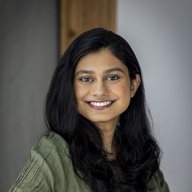
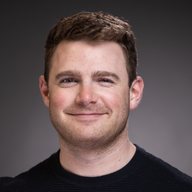
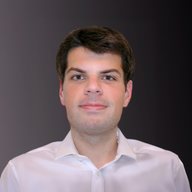
Founding team



What practitioners should know
For researchers
- Open RL environment: FinQA on Meta PyTorch / Hugging Face OpenEnv, with four MCP tools, a binary reward with fuzzy numeric matching, and integration with TRL, TorchForge, veRL, SkyRL and Unsloth. The data, HF snorkelai/finqa-data, is Apache-2.0 and labelled evaluation only ('Do not train on it').
- Snorkel co-authors, maintains or hosts several agent benchmarks: Terminal-Bench (2.0 to 4.0), OSWorld 2.0 (led by XLANG Lab), Agents' Last Exam (led by UC Berkeley RDI, arXiv 2606.05405), Senior SWE-bench (with Princeton and UW-Madison, Harbor-native), LibraryDesignBench (arXiv 2609.36730) and SlopCodeBench. Many of these are grant-funded collaborations rather than Snorkel-only work.
- Published RL and data research: RLVR in Low Data Regimes (arXiv 2604.18381, which Snorkel lists as MLSys 2026), RIFT rubric failure taxonomy (arXiv 2604.01375), Shrinking the Generation-Verification Gap with Weak Verifiers (NeurIPS 2025) and the Underwrite insurance agent benchmark (arXiv 2602.00456, CAIS).
- Self-reported RL-training results on Snorkel's own environments: Qwen3-30B on the insurance enterprise environment (+8.1 BFCL Multi-Turn, +5.8 τ³-bench overall, +14.0 τ³-bench airline), and a 4B model on FinQA beating the 235B model from the same family.
- Research leadership: Chief Scientist Frederic Sala (UW-Madison) and co-founder and Head of Research Paroma Varma. The company claims 250+ peer-reviewed papers cited more than 25,000 times.
For program managers
- Scale: $350M Series E at $3.5B (2026-09-22, co-led by Insight Partners and S32). The company says ARR passed $375M, and TechCrunch reports the same figure. Reuters reports a run rate above $350M, up from about $20M a year earlier. Disclosed funding totals about $585M, plus an undisclosed 2025 strategic investment from Accenture.
- Frontier-lab ties are self-claimed. The homepage partner logo wall shows Google, Anthropic, OpenAI, Mistral AI, Microsoft and AWS. The CEO says Snorkel partners with 'frontier labs, hyperscalers, neolabs ... and U.S. government agencies' without naming them. Reuters quotes the CEO on demand 'from frontier AI labs', but no press source names a lab customer.
- Engagement model: a managed 'frontier AI data factory' that delivers expert tasks, environments, rubrics and evals. It combines synthetic generation and hundreds of QC agents with expert contributors, so it is not a pure human marketplace. TechCrunch notes that expert payments sit in cost of goods sold.
- Government and enterprise signals: completed a Defense Innovation Unit challenge (2025-12), won the Army xTech AI Grand Challenge (2025-08), and has a strategic partnership and investment with Accenture for financial services (2025-08).
- Maturity: founded in 2019 out of the Stanford AI Lab and moved from Snorkel Flow software to data-as-a-service in 2025. LinkedIn places it in the 201-500 band, and Greenhouse lists 41 open roles, about 12 of them in DaaS functions.
For data ops
- Security: the SafeBase trust center at security.snorkel.ai lists SOC 2 Type II, HIPAA, NIST CSF and AWS Qualified Software. The SOC 2 report, HIPAA report, pen-test report, security whitepaper and DPA are available through the portal. Infrastructure runs on AWS.
- Publicly shown formats: OpenEnv environments with MCP tool servers in Docker (FinQA), Harbor-format benchmark datasets (Senior SWE-bench on GitHub and Harbor Hub), and Hugging Face datasets and Spaces under the snorkelai org.
- Code and data: the GitHub org github.com/snorkel-ai (senior-swe-bench-v2026.06, terminal-bench, long-context-eval) and Hugging Face at huggingface.co/snorkelai.
- Snorkel has not published delivery formats, APIs or licensing for its commercial datasets, environments or Terminal-Bench+. Confirm export formats, harness compatibility and data-use terms during procurement.
Benchmarks & research
Products
Scale & velocity
Research depth
Capital
| Date | Round | Amount | Led by | |
|---|---|---|---|---|
| 22 Sep 2026 | Series E | $350M valuation $3.5B | Insight Partners, S32 | source ↗ |
| 6 Aug 2025 | Strategic investment | undisclosed | Accenture | source ↗ |
| undisclosed | ||||
| 29 May 2025 | Series D | $100M valuation $1.3B | Addition | source ↗ |
| 9 Aug 2021 | Series C | $85M valuation $1B | BlackRock, Addition | source ↗ |
| 7 Apr 2021 | Series B | $35M | Lightspeed Venture Partners | source ↗ |
| Jul 2020 | Seed + Series A | $15M | – | source ↗ |
| $15M (seed + Series A combined) | ||||
Security & compliance
Product
Buyer analysis
How we verified this
Related vendors
Sources
- snorkel.ai/ · 2026-10-05, Homepage: offerings, partner logo wall, SOC 2 and HIPAA badges, Security link
- snorkel.ai/press/snorkel-ai-raises-350m-to-scale-the-data-factory-for-fr · 2026-10-05, Series E release: $350M at $3.5B, Insight and S32 co-lead, investor list, ARR above $375M, DaaS launched Sep 2025, domains healthcare, law and software engineering
- techcrunch.com/2026/09/22/snorkel-ai-triples-valuation-to-3-5b-as-demand · 2026-10-05, $1.3B prior valuation, $375M run rate, 18x, hybrid model, peers Mercor, Handshake and micro1
- snorkel.ai/press/snorkel-ai-valued-at-3-5-billion-amid-surging-demand-fo · 2026-10-05, Reuters item reprinted on Snorkel's press page: run rate above $350M, up from about $20M a year earlier; CEO quote on frontier-lab demand
- snorkel.ai/press/training-data-provider-snorkel-ai-raises-350m-at-3-5b-v · 2026-10-05, Press reprint (2026-09-23): business model changed from software to datasets and RL
- snorkel.ai/blog/data-2-0-and-the-research-era-of-ai-data/ · 2026-10-05, CEO post: partner categories, Agentic Data Platform, QC-agent figures
- snorkel.ai/company/ · 2026-10-05, Founded 2019; investor list including D.E. Shaw and SV Angel
- snorkel.ai/blog/introducing-application-studio/ · 2026-10-05, Series B blog: $35M led by Lightspeed; previous investors Greylock, GV, In-Q-Tel and Nepenthe; prior $15M seed and Series A
- snorkel.ai/blog/85-million-series-c-accelerating-data-centric-ai-enterpr · 2026-10-05, Series C: $85M at $1B, BlackRock and Addition lead, 2021-08-09
- snorkel.ai/press/snorkel-ai-scores-35m-series-b-to-automate-data-labelin · 2026-10-05, TechCrunch 2021-04-07 reprint: $35M Series B, $50M total
- snorkel.ai/press/meet-the-stanford-ai-lab-alums-that-raised-15-million-t · 2026-10-05, Forbes 2020-07-14 reprint: $15M raised
- snorkel.ai/press/snorkel-ai-raises-100-million-to-build-better-evaluator · 2026-10-05, Forbes 2025-05-29 reprint: $100M Series D at $1.3B, Addition lead
- snorkel.ai/press/accenture-invests-in-snorkel-ai-to-help-financial-servi · 2026-10-05, Accenture strategic investment (2025-08-06), amount undisclosed
- snorkel.ai/press/snorkel-ai-completes-defense-innovation-unit-challenge/ · 2026-10-05, DIU challenge completed (2025-12-10)
- snorkel.ai/wp-json/wp/v2/press?per_page=50 · 2026-10-05, Press archive (146 items) used to check funding and 2026 items
- snorkel.ai/research/ · 2026-10-05, Papers and venues: MLSys 2026, NeurIPS 2025, CAIS, ICLR 2026 workshop
- snorkel.ai/blog/building-finqa-an-open-rl-environment-for-financial-reas · 2026-10-05, FinQA OpenEnv environment (2026-03-30)
- huggingface.co/datasets/snorkelai/finqa-data · 2026-10-05, apache-2.0 tag; evaluation only
- huggingface.co/snorkelai · 2026-10-05, HF org
- github.com/snorkel-ai · 2026-10-05, Verified GitHub org: senior-swe-bench-v2026.06, terminal-bench, long-context-eval
- snorkel.ai/blog/enterprise-environments-ai-agents/ · 2026-10-05, Enterprise environments and Qwen3-30B RL results (2026-08-03)
- snorkel.ai/blog/curriculum-learning-coding-agents/ · 2026-10-05, Terminal-Bench+ (2026-09-15)
- snorkel.ai/blog/rl-environments-for-llm-agents-design-rewards-and-valida · 2026-10-05, RL environments explainer (2026-09-28)
- snorkel.ai/blog/2026-the-year-of-environments/ · 2026-10-05, Dec 2025 positioning post on environments
- snorkel.ai/blog/terminal-bench-4-continuous-qa/ · 2026-10-05, Terminal-Bench 4.0 (2026-08-28)
- snorkel.ai/leaderboard/terminal-bench-4-0 · 2026-10-05, TB 4.0 leaderboard: 66 tasks, top GPT-6 Astra at 58.2%
- snorkel.ai/blog/osworld-2-0-why-computer-use-agents-fail-most-tasks/ · 2026-10-05, OSWorld 2.0 blog (2026-09-03)
- snorkel.ai/press/snorkel-ai-highlights-first-wave-of-open-benchmarks-gra · 2026-10-05, $3M Open Benchmarks Grants first wave (2026-07-24)
- benchmarks.snorkel.ai/ · 2026-10-05, Grants program page and steering committee
- snorkel.ai/press/researchers-from-snorkel-ai-princeton-and-uw-madison-re · 2026-10-05, Senior SWE-bench release (2026-07-01)
- senior-swe-bench.snorkel.ai/ · 2026-10-05, Leaderboard top: Claude Fable 5.1 at 34.7%; GitHub and Harbor Hub links
- snorkel.ai/research-paper/agents-last-exam/ · 2026-10-05, Agents' Last Exam
- snorkel.ai/research-paper/os-world-2/ · 2026-10-05, OSWorld 2.0 paper page
- snorkel.ai/research-paper/can-agents-design-libraries-for-agents/ · 2026-10-05, LibraryDesignBench
- arxiv.org/abs/2609.36730 · 2026-10-05, LibraryDesignBench arXiv, submitted 2026-09-29
- arxiv.org/abs/2604.18381 · 2026-10-05, RLVR in Low Data Regimes, 2026-04-20
- arxiv.org/abs/2604.01375 · 2026-10-05, RIFT rubric paper, 2026-04-01
- arxiv.org/abs/2602.00456 · 2026-10-05, Insurance underwriting benchmark, Snorkel AI, 2026-01-31
- arxiv.org/abs/1711.10160 · 2026-10-05, Original Snorkel paper, PVLDB 2017
- snorkel.ai/blog/medpair-measuring-whether-physicians-and-ai-agree-on-wha · 2026-10-05, MedPAIR (2026-10-02)
- snorkel.ai/press/fortune-openai-astra-evaluation-metrics/ · 2026-10-05, Fortune 2026-09-04 quoting Vincent Sunn Chen
- security.snorkel.ai/ · 2026-10-05, SafeBase trust center: SOC 2 Type II, HIPAA, NIST CSF, AWS Qualified Software
- job-boards.greenhouse.io/snorkelai · 2026-10-05, 41 open roles by department; SF, NYC, US remote
- snorkel.ai/join-us/ · 2026-10-05, Careers page (30+ roles) and Expert Community program
- www.linkedin.com/company/snorkel-ai · 2026-10-05, 201-500 band; HQ 101 2nd St SF; Redwood City and NYC offices
- snorkel.ai/author/alex-ratner/ · 2026-10-05, Ratner bio and headshot (image/jpeg 200, visually checked)
- snorkel.ai/author/christopher-re/ · 2026-10-05, Ré bio and headshot (visually checked)
- snorkel.ai/author/paroma-varma/ · 2026-10-05, Varma bio and headshot (visually checked)
- snorkel.ai/author/braden-hancock/ · 2026-10-05, Hancock bio and headshot (visually checked)
- snorkel.ai/author/henry-ehrenberg/ · 2026-10-05, Ehrenberg bio and headshot (visually checked)
- snorkel.ai/author/fred-sala/ · 2026-10-05, Sala bio and headshot (visually checked: single-person headshot)